
Home cameras are legal in Queensland and seldom cause trouble. Where problems do arise, it is usually a camera pointed at a neighbour, a microphone left on, or a business without a privacy plan.
This guide is general information written by camera installers. It is not legal advice. For a dispute, a tenancy matter or a business privacy question, speak to a solicitor or the relevant government body.
Installing cameras to record your own home is lawful in Queensland. You do not need a permit, you do not register the system and you are not required to notify anyone. There is no cap on the number of cameras.
The Privacy Act 1988 generally does not apply to individuals recording their own home for personal or household reasons. That is why home and business systems are treated differently.
The household exemption is for protecting property. Deliberately pointing a camera into a neighbour’s home, bathroom or private yard is another matter. The Queensland Criminal Code makes it an offence to record people in a private place or doing a private act without their consent.
Even without an offence, a camera aimed at a neighbour can lead to a complaint of harassment or nuisance. The intent behind the camera counts.
On suburban blocks, side passages often look straight at the neighbour’s wall and windows. Aim along your own side and use privacy masks to black out anything of theirs.
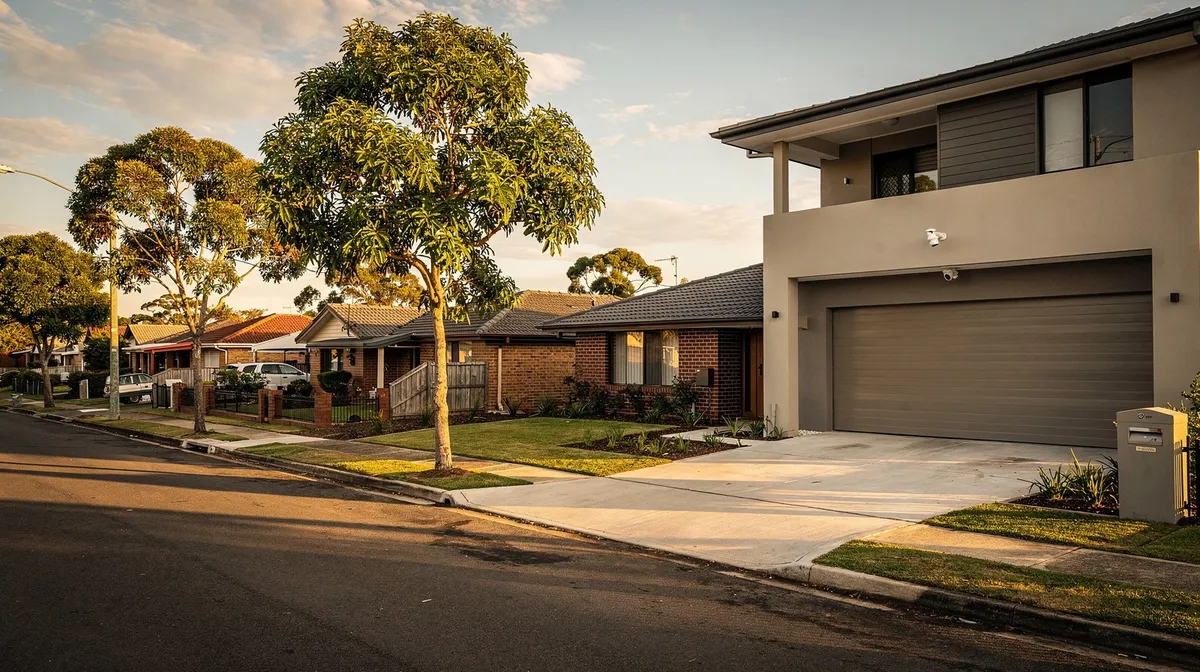
A garage or front entry camera usually captures some of the footpath and road. That is generally accepted, since there is little expectation of privacy in a public street. Masking public areas is still a good idea, as it keeps your recording on your property and stops alerts every time a car passes.
The Invasion of Privacy Act in Queensland restricts using a listening device to record a private conversation you are not part of. A camera microphone that picks up conversations on the footpath or next door can stray close to that.
Many cameras arrive with audio switched on. We switch it off unless there is a clear reason to use it. Talking to a courier through a doorbell is different to recording everything within range around the clock.
In a townhouse complex, outside walls, driveways, gardens and visitor parks are usually common property. Cameras there need body corporate approval, and by-laws may also cover doorbells and cameras on your own entry. Shared systems should have a clear purpose, limited access and a set retention period.
A business does not have the household exemption. Footage of identifiable people is personal information. Organisations covered by the Privacy Act, generally those turning over more than $3 million a year plus certain others such as health service providers, must manage how footage is collected, stored, used and disclosed.
That means signs at entrances, a reason for each camera, no cameras in toilets or change rooms, telling staff before cameras cover their work areas, limited access, a fixed retention period and a process for requests. Smaller businesses outside the Act are still wise to follow the same approach.
Landlords may cover the outside and shared areas but not the inside of a tenant’s home. Cameras should be described in the lease. Get advice before installing at a tenanted property.
If police ask for footage, provide it. Exporting a clip to a USB stick takes a couple of minutes, and every customer is shown how.
Your own property: fine. Some footpath and street: generally fine, better masked. Neighbours’ private areas: not okay. Recording others’ conversations: restricted. Complexes: body corporate approval. Businesses: signs, purpose, limited access, set retention. Rentals: get advice first.
This is not legal advice. For business privacy, the Office of the Australian Information Commissioner is a good first stop.
No. There is no permit or registration for a home camera system in Queensland.
It can become one. Re-aim the camera or add a privacy mask so the neighbour's yard is blacked out of the recording.
Be careful. Recording private conversations you are not part of is restricted in Queensland. Most people are better off leaving audio recording off.
Give it to police. Posting it online and naming people can lead to legal trouble, especially if you identify the wrong person.
Installed prices, what changes them, and how to spot what a cheap quote has left out.
PlanningWhich spots to cover first, when to add more cameras and how to choose lenses.
Buying adviceThe real differences between wired, wifi and battery cameras, and where each one fits.
HiringLicences, cable routes, hardware, recording time and support, in one checklist.
BrandsNight vision, detection, deterrence and apps across the three brands, and which specifications really count.
4K wired camera systems for southside homes, with the cable out of sight and the app on every phone.
BusinessCamera systems for restaurants, shops, offices and industrial units, planned around real risks.
RepairsFinding and fixing faults in any brand of system, and upgrading old analogue cameras.
DeterrenceCameras with a siren, strobes and two way audio that respond to people, not animals.
Cameras and cabling in Runcorn 4113.
4109Cameras and cabling in Sunnybank 4109.
4109Cameras and cabling in Sunnybank Hills 4109.
4110Cameras and cabling in Acacia Ridge 4110.
4108Cameras and cabling in Coopers Plains 4108.
4113Cameras and cabling in Eight Mile Plains 4113.
Send a few details about the property and we will come back with a written quote that itemises everything.
Thanks. Your details are now with Richard (QLD Lic #4930731, ACMA #A058225), who will look over the job and send back a written, itemised price within 15 to 30 minutes during trade hours.